This page is a translation provided for reference. The Japanese original is authoritative for all legal matters.
The Okinawa Trailer House Association works to spread correct, law-based installation methods and to create an environment users and operators can rely on.
News
We have reflected the “Kijun Sōsoku 2026” standards.
Based on the 2026 edition of the Japan Conference of Building Administration’s “Application Examples of General Standards and Collective Regulations for Building Confirmation,” we have updated the treatment of trailer houses and similar vehicles.
See the key revisions / A4 version (PDF) / Old–new comparison table (PDF)
About
To meet the growing demand for trailer houses, we were founded with the aim of advancing their adoption while ensuring safety and legal compliance.
Trailer houses hold promise for a wide range of uses — homes, lodging, even emergency temporary housing — but safety and legal compliance are essential in how they are installed and operated.
To guide and oversee trailer house installation within the prefecture properly, we have established our own installation standards and work to make them widely known. We also gather and organize relevant legislation and the latest information, presenting it clearly to users and operators so that they can proceed with confidence.
What we aim for is not mere adoption. “a new culture of living grounded in confidence, safety and correct knowledge” built up from Okinawa. Drawing on the region's rich natural setting, we will promote trailer houses that are sustainable and dependable.
What is it
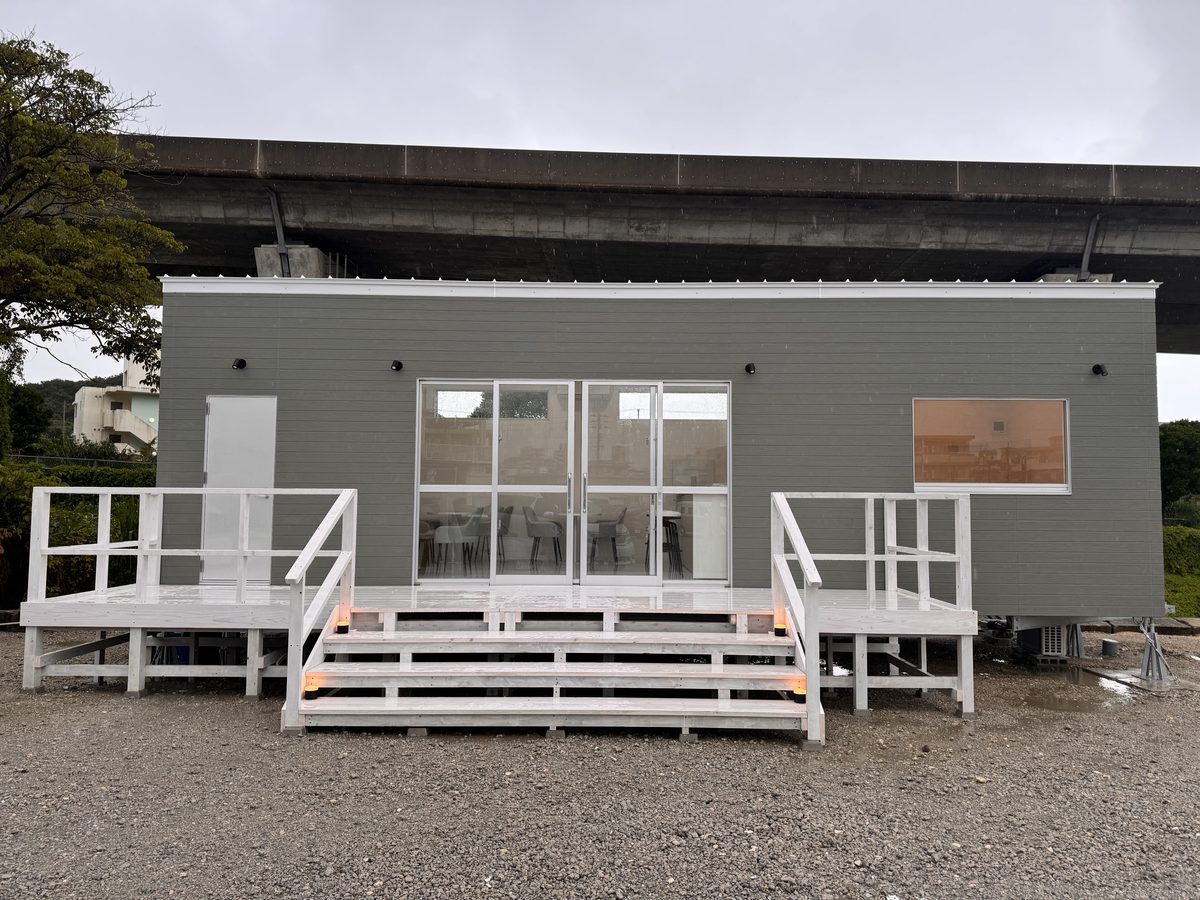
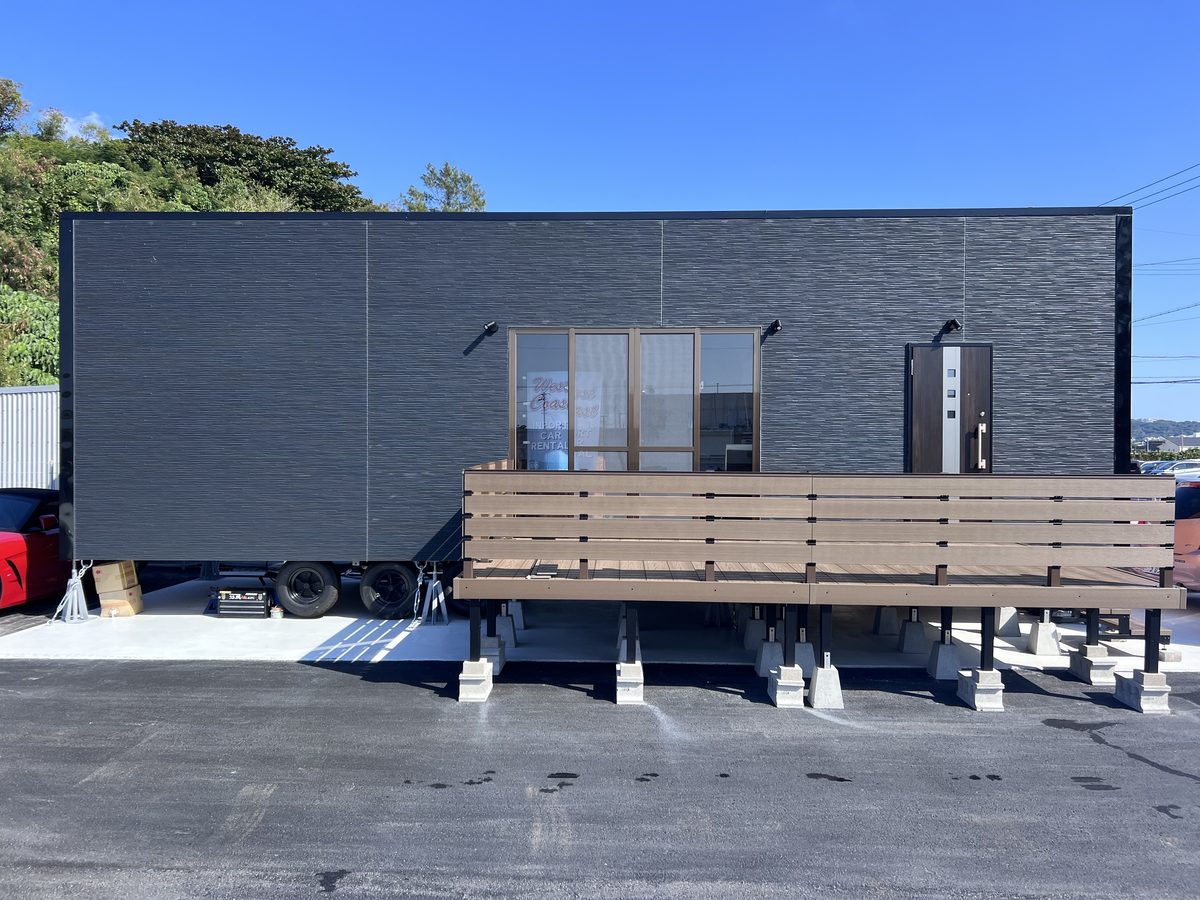
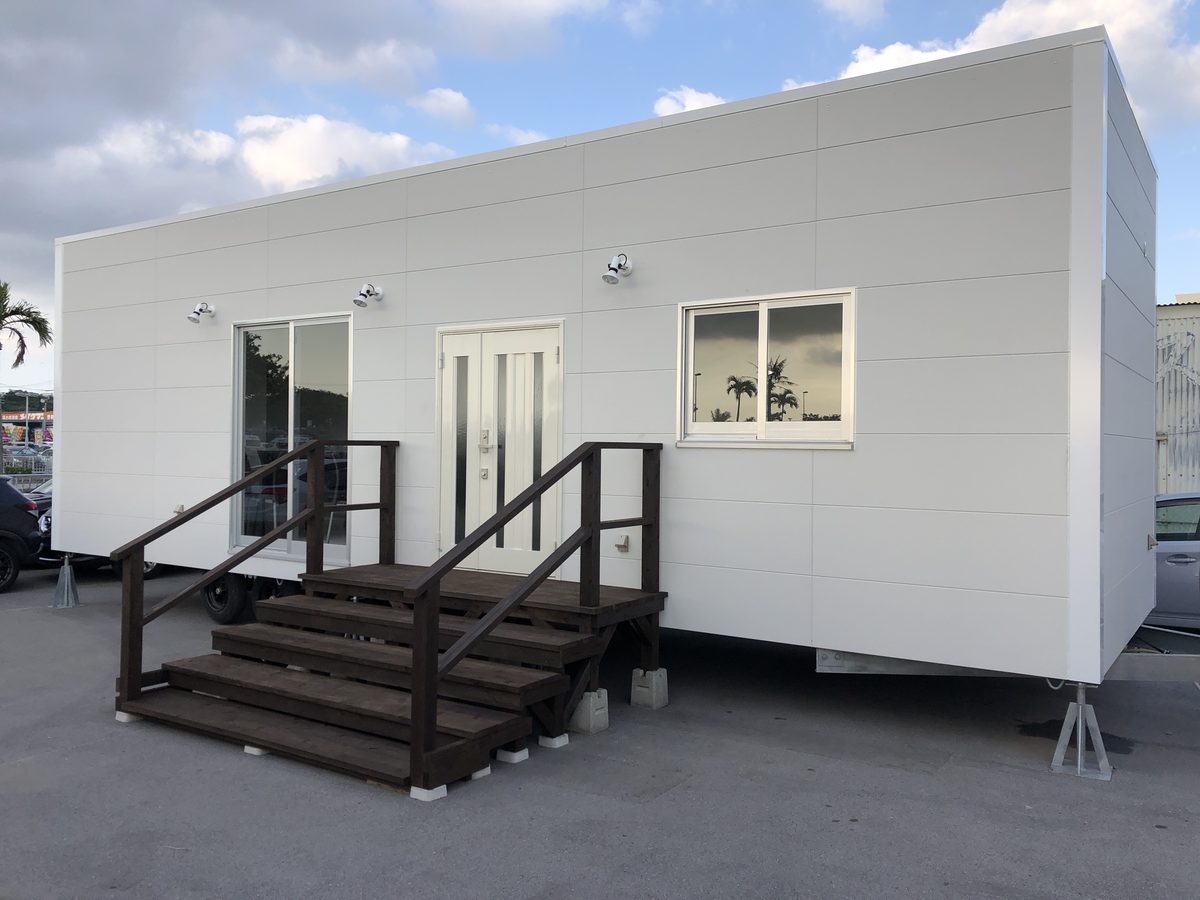
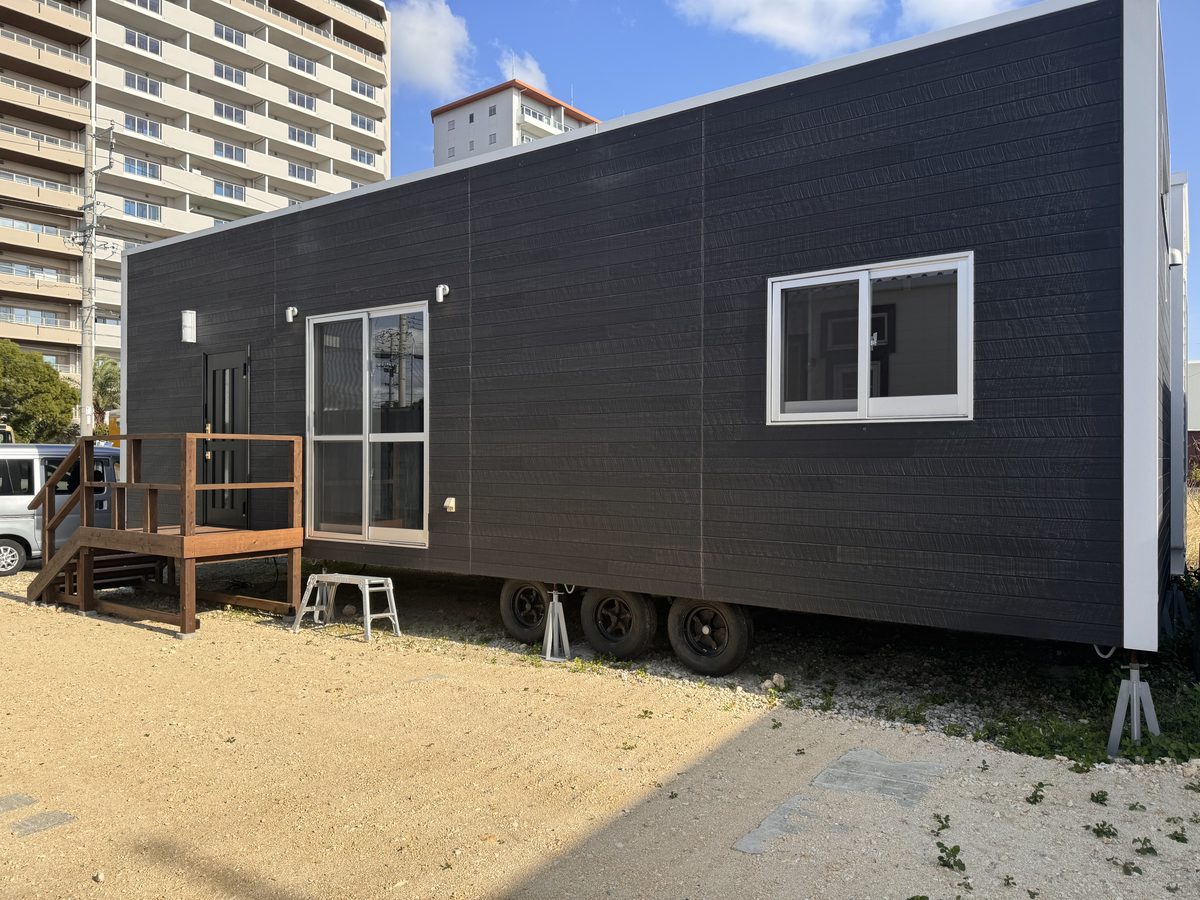
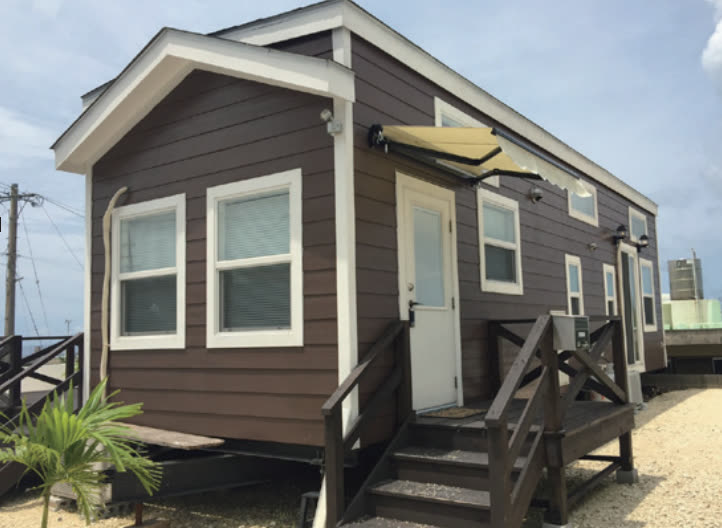
The Japan Conference of Building Administration defines it as “structures utilizing vehicles (trailer houses, etc.)”. Unlike an ordinary building, it presupposes that it can be moved at any time and at will.
Kijun Sōsoku 2026 — Trailer Houses (A4 version)Kijun Sōsoku 2026 — Old–new comparison table
Installation and operation must also be handled in line with that characteristic. In recent years, lodging and glamping facilities using trailer houses have spread within the prefecture, drawing attention as a new form of the tourism industry. Demand for homes, offices, shops and other uses is also rising, with adoption that takes advantage of a flexibility conventional buildings do not have.
Working from this definition of “a structure that makes use of a vehicle,” the Association makes “being movable at any time and at will” a condition of installation and promotes correct handling in accordance with legislation and administrative notices. Specifically, based on the standards set out in Ministry of Construction Notice Jushi-hatsu No. 170 (March 31, 1997), we provide guidance and information so that trailer house installation in the prefecture is carried out properly and safely.


Regulations
To enhance the safety and social trustworthiness of trailer houses, the Association promotes proper manufacturing, sales, and transport in compliance with the relevant laws and regulations.
When moving a trailer house on public roads, it is important to confirm the necessary procedures—such as vehicle inspection, relaxation certification of the safety standards, and special-vehicle passage permits—according to the vehicle’s structure, dimensions, weight, braking system, and so on.
For trailer houses that are within 2.5 meters in width and that conform to the safety standards for length, height, weight, braking devices, lighting devices, and the like, the Association’s basic policy is that they be operated on public roads only after undergoing the required inspection and registration.
Being within 2.5 meters in width alone does not allow a determination that vehicle inspection can be obtained.
The international classification of towed vehicles includes O categories based on vehicle weight.
| Category | Maximum weight |
|---|---|
| O1 | 750 kg or less |
| O2 | Over 750 kg to 3.5 tons |
| O3 | Over 3.5 tons to 10 tons |
| O4 | Over 10 tons |
O2 and O3 differ in the technical standards required for braking devices and the like. In particular, for trailer houses exceeding 3.5 tons, a general inertia-brake system alone may be insufficient to meet the standards, so confirming the vehicle structure, including the braking system, becomes important.
O2 and O3 are international vehicle classifications, and this distinction alone does not determine whether vehicle inspection and registration are possible within Japan. A gross vehicle weight exceeding 3.5 tons alone does not uniformly make inspection and registration impossible.
For trailer houses that do not conform to the ordinary safety standards for road transport vehicles, there is a system under which, if the prescribed requirements are met, they may be temporarily operated after receiving standard-relaxation certification from the District Transport Bureau. The certification review covers the vehicle structure, the purpose of operation, the route, safety measures, and so on.
For the standard-relaxation certification concerning temporary operation of a trailer house, a separate temporary operation permit is required.
Vehicles exceeding the general limit values set out in the Road Act require, in principle, procedures such as a special-vehicle passage permit. The general limit values include the following.
In addition, axle weight, wheel load, minimum turning radius, and the like are also subject to review.
Standard-relaxation certification and the special-vehicle passage permit are procedures with different purposes. Obtaining one certification or permit does not make the other unnecessary.
In transporting trailer houses, the Association promotes the following.
Through proper acquisition of vehicle inspection, the reliable completion of necessary permits and approvals, and thorough safe operation, the Association aims for the sound development of the trailer house industry as a whole. We will also strive to provide information to member businesses and to raise awareness of legal compliance, promoting the spread of safe and trusted trailer houses.
* The inspections, certifications, permits, etc. actually required differ depending on the individual vehicle specifications and operating conditions. Confirmation with the competent District Transport Bureau, road administrator, and the like is necessary before operation.
Building classification at the installation site and conditions for travel on public roads must be checked separately.
Building classification depends on equipment that obstructs movement, utility connections, size and installation conditions. Consult the building authority responsible for the site before installation.
Check with the transport office and road administrator about inspection, registration, safety standards or exemptions, and procedures for the planned route. A standards exemption does not replace vehicle inspection or road-access procedures.
General limits under Article 2: width up to 2.5 m, height up to 3.8 m and length up to 12 m. Semi-trailer length is measured differently; specified semi-trailers have a 13 m exception.
MLIT: Relaxation of standards for trailer houses (press release, Japanese)
The following 13 items are the Association's checklist. They do not replace legislation or administrative approvals. Meeting all items does not guarantee that a unit is exempt from classification as a building.

Checklist
These Association checklist items help maintain mobility. Confirm the conditions for each installation and journey with the relevant authorities and specialist operators in advance.
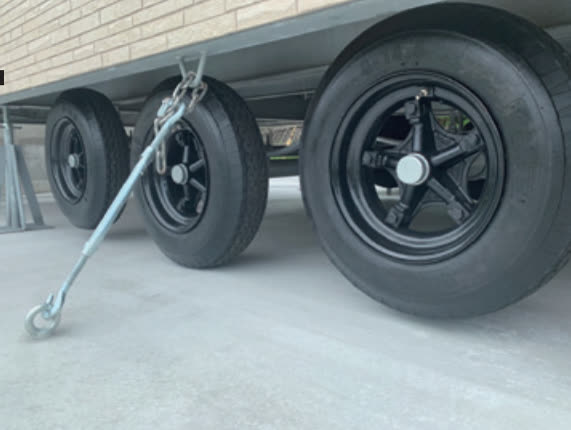
The axles have not been removed from the vehicle
Confirm the inspections, registration, approvals and road-access procedures required for travel on public roads
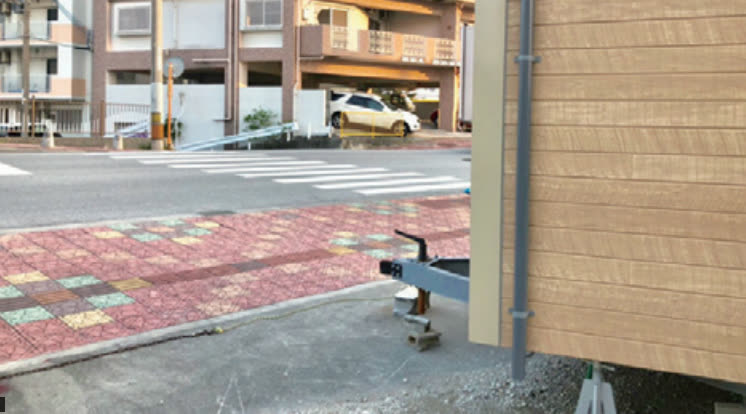
There is no fixed obstruction in the direction the trailer house would travel
A passage from the installation site to a public road is kept available at all times
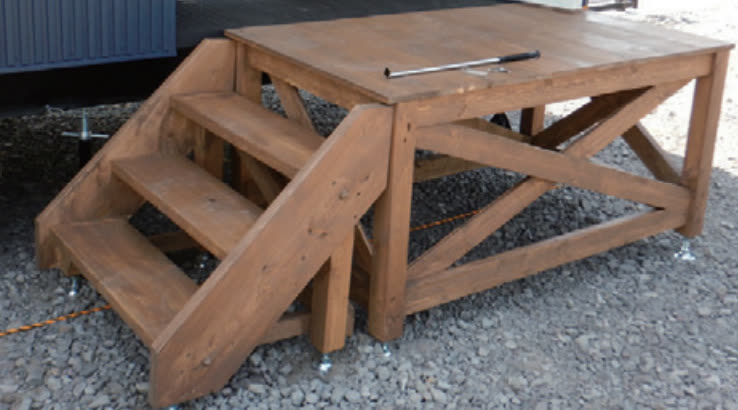
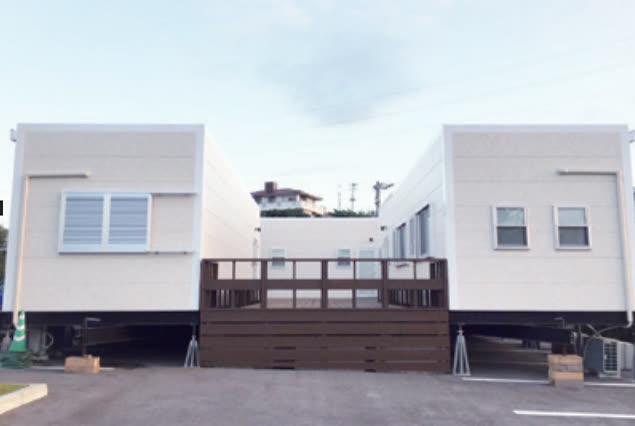
Steps, decks, porches and the like are independent structures
Multiple trailer houses are not joined together
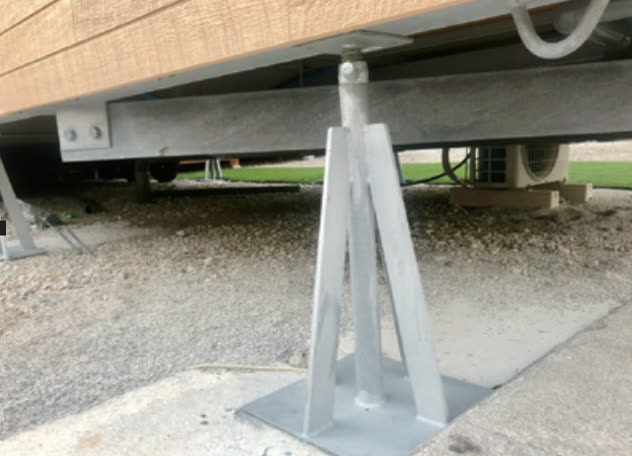
Dedicated jacks and similar supports can be removed without tools
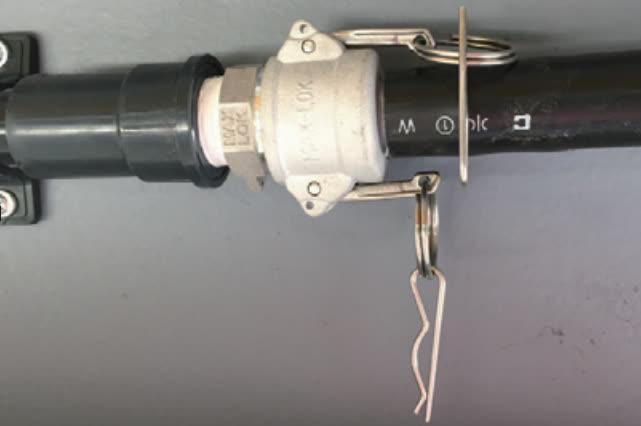
Water supply connection piping can be attached and detached without tools
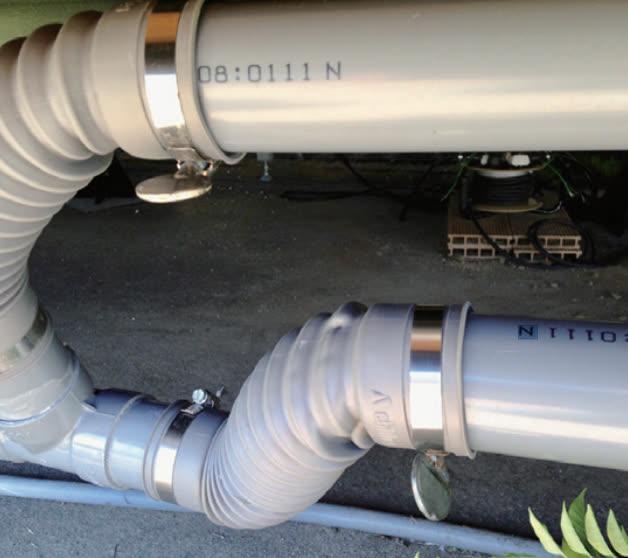
Drainage connection piping can be attached and detached without tools
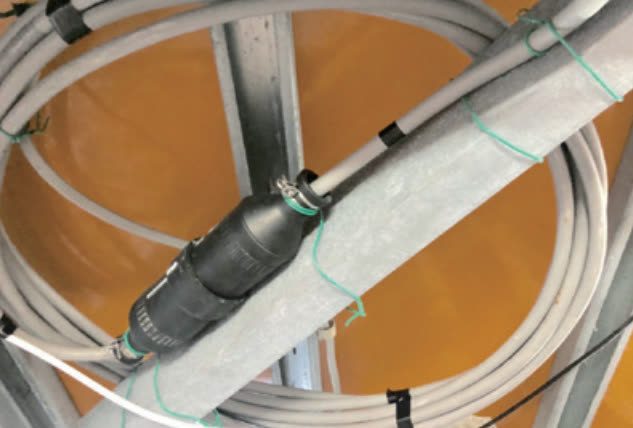
The electrical connection can be attached and detached without tools
Communications are used cable-free A home router and IP connectivity (internet line) are used.
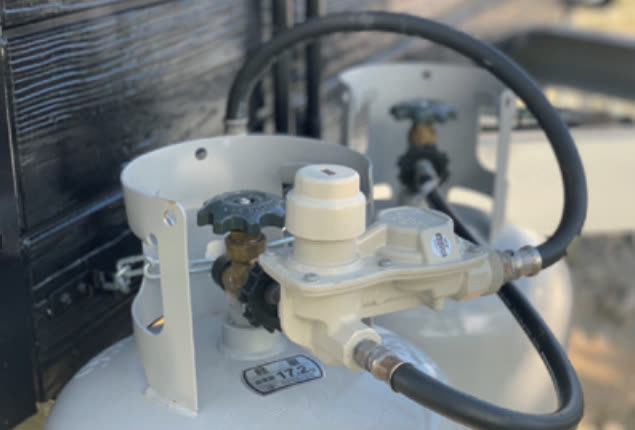
Confirm gas connection arrangements and safe disconnection procedures with the gas supplier
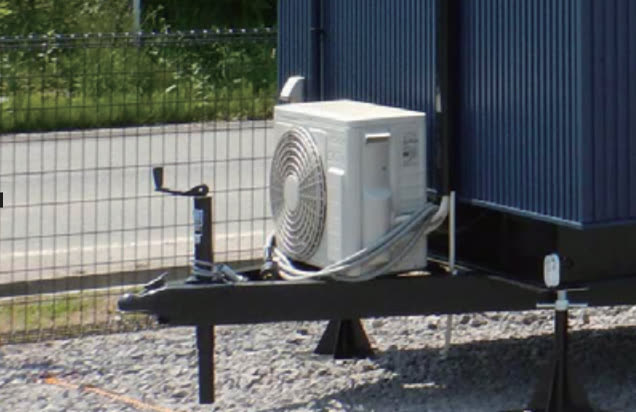
Outdoor units for air conditioning and the like do not impede travel of the trailer house
Standard
Excerpts from the prefectural interpretation guidelines revised on June 10, 2020. These are not the text of the law itself. Confirm current practice with the relevant authority.
Okinawa Prefecture: Building Standards Act Guidelines (PDF, section 1-3, Japanese)
Among trailer houses (vehicles without their own means of propulsion, towed to their destination by a motor vehicle or similar and used as a dwelling, office, shop or the like — that is, recognized as having an indoor use), those falling under any of the following shall be treated as buildings under Article 2, item 1 of the Act.
Further, even where a unit does not qualify as a building at the time of installation, if it later comes to fall under any of the following as a result of how it is maintained, it shall be treated as a building from that point.
A scrapped bus recognized as being used for an indoor purpose shall be deemed a building where it is fixed to the land (excluding those movable at any time and at will), or where it falls under item 2 of the main text (lifeline wiring and piping).
Here, a bus means an ordinary motor vehicle as defined in Article 3 of the Road Transport Vehicle Act with a capacity of 11 or more persons; a scrapped bus is one whose registration has been cancelled under Article 15 of that Act.
Major category: General provisions / Middle: Definition / Minor: Trailer house — Act, Article 2
“Impeding movement” in item 1 of the main text also includes the following.
References: 1987 Reiki No. 419
1997 Notice No. 170
2002 Japan Conference of Building Administration, General Provisions, p.14
National Standard 2026
In the 2026 edition of the Japan Conference of Building Administration’s “Application Examples of General Standards and Collective Regulations for Building Confirmation,” the treatment of trailer houses and similar vehicles was reorganized and expanded. Please review it together with Okinawa Prefecture’s handling standards. The following is an excerpt of the key points and is not the text of the law itself. For individual decisions and the latest practice, please check with the relevant administrative authority in advance.
The posted documents are excerpts and summaries of the Japan Conference of Building Administration’s application examples and do not substitute for the text of the law itself or for administrative permits and approvals. Satisfying all of them does not guarantee that a unit will not fall under the definition of a building.
Membership
We welcome enquiries from businesses involved in manufacturing, selling, installing or operating trailer houses, and from anyone considering adopting one.
We share the 13 inspection criteria and the thinking behind how they are applied. You can consult us from the pre-installation check onward.
We provide information on notices concerning the Building Standards Act and the Road Transport Vehicle Act, and on how practice differs between municipalities.
The Association provides guidance and advice on checking the state of an installation and on remedying cases that do not meet the criteria.
Details of membership conditions and fees are provided individually when you contact us. Please feel free to get in touch first.
Contact
We accept enquiries from anyone — consultations on installation, membership applications, media requests and more.
For installation, membership or media inquiries, please call our main number.
098-917-1536This website does not accept inquiries through an online form.